
Cells Need Full Time Protection
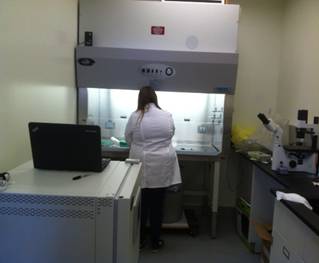
The best environment for in vitro cell growth is also a favorable environment for microbial growth. Peoplecentric work environments include hoods, waterbaths and incubators that open into room air. In all of these spaces, cells and their culture vessels are exposed to airborne and people-borne contaminants.
The Cytocentric approach provides full-time protection for cells from microbial contamination by physically separating cell cultures from potential contaminants. These include closed systems like barrier isolators that prevent room air contact with cell cultures. Learn more on how to avoid cell culture contamination below.
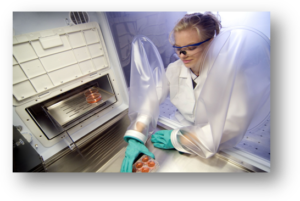
By their very nature, closed systems also exclude people.
This is one advantage of a barrier isolator over a system like a clean room, in which people work very hard work to maintain an aseptic environment while simultaneously being the largest sources of contamination. In fact, the more vigorously people work in a cleanroom, the more they actually contaminate the space with their own personal particles.
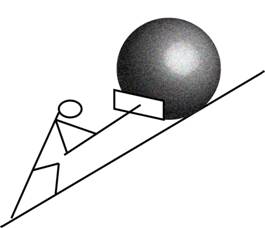 Providing a barrier between people and the cell cultures they work on eliminates the largest sources of contamination.
The most insidious contaminants are mycoplasma. Unlike visible bacterial and fungal contaminations, they are not obvious to a cell culturist during routine cell maintenance tasks. Mycoplasma, although well-known in the cell culture world, are estimated to contaminate up to 35% of cell cultures in research. The human mouth is a rich source of mycoplasma, which makes a simple conversation in an open, room-air lab a risk to cell cultures.
From the cells’ point of view, taking the people out of the cells’ environment is one of the best ways to protect cell cultures from contamination.
A standard room-air CO2 incubator is considered to be the optimal place for cells in the lab, but it usually contains an open waterpan in the bottom for humidity, which is also the optimal place for microbial growth in the lab.
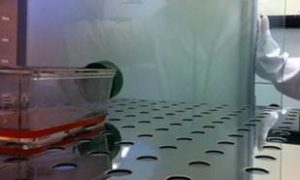 Every time the door is opened, microbial contaminants from the room are introduced into the incubation environment. Anti-microbial water pan additives or copper incubator linings have been used to reduce the risk of waterpan contamination, but they are often not effective at preventing microbial growth. See a relevant discussion on Researchgate here.
The Cytocentric solution to this problem is to not open the incubator into an unregulated room at all, but into a protected workspace where airborne contaminants are not present.
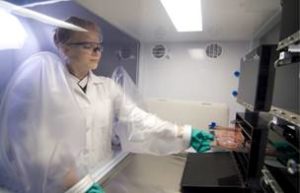 Barrier isolators shrink the critical clean spaces from room-sized down to workspace-sized. There is a growing trend, particularly in the cellular therapy world, toward shrinking the critical space in “closed” systems to help limit the opportunities for microbial contamination. That is, shrinking the work tunnel down to the tubes, bags, and cell culture vessels that actually contact cells.
However, these “closed” systems necessarily have to be breached in order to introduce or remove cells and reagents. With each breach, all the risks of the external room environment intrude upon that closed system. If that room environment contains room air or people, all the accompanying risks come to bear on that closed system. So following along with the trend to shrink critical spaces is the trend of enclosing “closed” systems within a barrier isolator to create a protected space for cell and system access.
It takes full-time control of the environment outside the cell culture vessels to reduce contamination risks to cell cultures. Cells need full-time protection.
We will be posting more in the next few weeks about contamination and good cell culture practices throughout the laboratory.
Recent Articles

Cytocentric Visionaries: Dr. David Gozal, MD – Part Two
Cytocentric Visionaries: Dr. David Gozal, MD Part 2: COVID-19 Research, Prone Positioning, and Chronoadequacy Alicia Henn, PhD MBA, Chief Scientific Officer, BioSpherix David Gozal, MD, MBA, PhD (Hon) is the Marie M. and Harry L. Smith Endowed Chair and Chairperson of...

Cytocentric Visionaries: Dr. David Gozal, MD – Part One
Cytocentric Visionaries: Dr. David Gozal, MD Part 1: COVID-19, ACE2, and the Circadian Clock Alicia Henn, PhD MBA, Chief Scientific Officer, BioSpherix David Gozal, MD, MBA, PhD (Hon) is the Marie M. and Harry L. Smith Endowed Chair and Chairperson of the Department...

Cytocentric Visionaries: David Lawrence
Cytocentric Visionaries: Dr. David Lawrence, University at Albany Inflammation and Oxidative Stress: Cell Conditions Matter, Even for CAR-T Dr. David A Lawrence is Professor and Chair of Environmental Health Sciences, at the School of Public...
About The Author

Alicia D Henn, PhD, MBA
Chief Scientific Officer of BioSpherix, Ltd
Alicia Henn has been the Chief Scientific Officer of BioSpherix, Ltd since 2013. Previously, she was a researcher at the Center for Biodefense Immune Modeling in Rochester, NY. Alicia obtained her PhD in molecular pharmacology and cancer therapeutics from Roswell Park Cancer Institute in Buffalo, NY and her MBA from the Simon School at University of Rochester in Rochester, NY.
If you would like to be featured in our Cytocentric Visionary Series, contact us. We would love to hear about your work.